I’ve been inspired by my recent Italian trip to make up a list of the best Italian films I’ve seen. The last 50 years were very rich in terms of Italian cinematography and, so, I tried to include all the major directors in the list. These films represent all the stereotypes (in the best sense of the word) we love and hate about Italy: poverty and human struggle, impossible beauty, divine architecture, the scorching sun, the misogyny and chauvinism and the great, fun, laid-back people.
- La Strada. 1954.
Dir.: Federico Fellini.
With: Giulietta Masina, Anthony Quinn.

Fellini, who is most famous for his work dealing with the idle social classes, presents a film about a naive child-woman Gelsomina who is sold to a gypsy for his road show. She falls in love with him, however, his brutish nature stops him from showing any compassion to her. It is a tragic situation, Gelsomina is always willing to please him, yet he maintains his dominance over her by bullying and intimidation. There are many funny and warm moments in the film and one cannot help but really care about Gelsomina’s fate. There is also a constant feeling of hope that the man will finally show some kind of emotion. The story is told in an amazing way, the viewer is always left to second-guess the gypsy’s intentions. ‘La Strada’ also won an Oscar for the Best Foreign Film.
- La Dolce Vita. 1960.
Dir.: Federico Fellini.
With: Marcello Mastroianni, Anita Ekberg.

This super famous work marks the transition between Fellini’s earlier neo-realist period (La Strada is an example of that) and his art films. Most people have probably heard of the film but not actually seen it. Also, most people must have seen the famous scene with Anita Ekberg at the Trevi Fountain. I, personally, don’t understand why it’s such an epic scene as there are so many much better ones out there. There is no proper story in the classical sense of the word; we follow a tabloid journalist played by the lovely Marcello Mastroianni, who is constantly searching for a more meaningful and fulfilling life. He is ALWAYS distracted by women on the way. The film is full of symbolism: religious, emotional, social and political. It is a highly aesthetic film, on many an occasion did I simply admire the shots rather than concentrate on what was going on in the film. It is also very understated, there are many different shades to the film - at one point it is almost comical and then it becomes cynical or romantic. I think it is definitely worth watching, at least because it became so influential in world cinema and popular culture.
- L’Eclisse. 1962.
Dir.: Michelangelo Antonioni.
With: Monica Vitti, Alain Delon.

This is probably one of my most favourite films ever. It is also the last part of a trilogy. ‘L’Eclisse’ tracks a short summer romance in Rome between a pensive literary translator and an energetic stockbroker. However, the film is much more than a romantic story; it is imbued with black and white symbolism and is very critical of modern day alienation and speedy lives. But, on top of all things, the two actors are extremely, unbelievably, jaw-droppingly and heart-stoppingly beautiful. Seriously. Check them out.
- The Leopard. 1963.
Dir.: Luchino Visconti.
With: Burt Lancaster, Alain Delon, Claudia Cardinale.

This is the Italian Gone With The Wind. It is based on one of Italy's bestselling novels and tells the story of Don Fabrizio, a Sicilian Prince. He is faced with a new order in Italy in the nineteenth century and is forced to witness the decline of aristocracy and must choose to either follow his traditions or compromise and stoop to the level of the nouveau riche. The film boasts an international cast with the American Burt Lancaster and the French Alain Delon. It is filmed on location in Sicily. It is a beautifully shot story of family tradition and human dignity with plenty of balls (as in where people dance) and drama.
- Marriage - Italian Style. 1964.
Dir.: Vittorio De Sica.
With: Sophia Loren, Marcello Mastroianni.
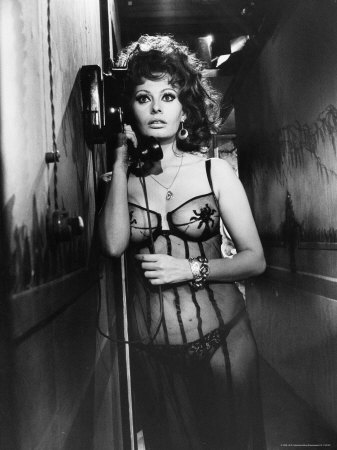
I never thought that Marcello Mastroianni could be so hateful! He plays Don Domenico, a selfish Neapolitan businessman who at one point picks up a young girl at a brothel and since then their lives are intertwined forever. Sophia Loren's portrayal of a tart is one of the most powerful and charismatic performances I have ever seen. She is so sly, innocent and strong at the same time. You could say that she was born to play this kind of roles. Her triumphant walk through the street, dressed in some horrible gaudy dress, with huge red hair and thick make-up is an absolute pleasure to watch. The story is a little silly, but the acting, the dialogues and the Southern passions are great.
- Cinema Paradiso. 1988.
Dir.: Giuseppe Tornatore.
With: Salvatore Cascio, Philippe Noiret.
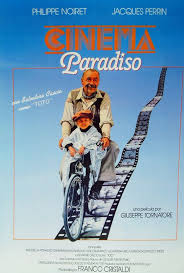
This 1988 film should be watched in its original length, not the director's cut which is far too long and leaves the ending completely smudged. This is a very heartwarming film about a little Neapolitan boy Toto and his big love for cinema. In fact, the whole film is a giant tribute to the art of cinematography. I only wonder where they managed to find such a natural, charming and naughty boy! Toto's only desire in life is to watch films at the local cinema which is the cultural centre of his village. The story is a great reminiscence of childhood, it's fears and anxieties and friendships which often become forgotten. This film is full of warmth, humour and bitter-sweet nostalgia. I highly recommend it to all. It is also one of the few films that can make me cry ever so slightly.
- La Vita e Bella. 1997.
Dir.: Roberto Benigni.
With: Roberto Benigni, Giorgio Cantarini.

Gosh, another tear-jerker. This Oscar-winning film tackles the Holocaust horrors from a very unexpected angle. At first it is a full-on slapstick comedy and later it turns into great story of self-sacrifice. Roberto Benigni is a bit of a Dude for making this film. I remember watching it when I was 9 and I could not sleep for days afterwards, I kept imagining what would happen if I were the little Jewish boy. Brrrr.

